
We’ve all been there—whether it’s Keto, Paleo, Intermittent Fasting, or the classic “Low Carb” grind. On paper, the logic is a total no-brainer: “Eat less, move more.” It’s genius in its simplicity.
But if it were actually that simple, wouldn’t we all be lean, mean machines by now?
Think about it. We see people grinding on treadmills every morning, walking paths every evening, and the “healthy” sections of our supermarkets are more crowded than ever. We are trying harder than any generation before us, yet the results don’t seem to stick. Ever wondered why?
Most diet plans are restrictive and depend on discipline and willpower. It’s like trying to swim upstream in a river. We are fighting with our bodies to do something they aren’t meant to do.
Our body is significantly smarter than we are.
When you drastically cut calories or restrict entire food groups, your body doesn’t see a “diet”—it sees a threat to its survival. In response, it triggers a survival mechanism that makes you hyper-efficient at storing energy and hyper-sensitive to hunger. This is why, after a few weeks of “discipline,” you find yourself staring into the fridge at midnight.
How the GLP-1 Optimized Nutrition Plan Fixes the Signal
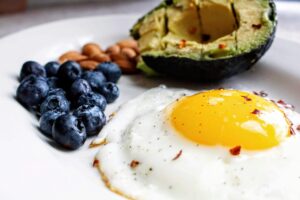
GLP-1 (Glucagon-like peptide-1) isn’t some mysterious lab-made chemical; it’s a natural hormone produced right in our gut—specifically in specialized L-cells in the lower intestine. When we eat, these cells release GLP-1, and it handles two critical jobs for us:
-
It slows down the stomach: It physically keeps food in there longer, so we feel full for hours rather than minutes.
-
It talks to the brain: It crosses the blood-brain barrier and tells our “hunger center” that the job is done. The “food noise” simply stops.
Modern medicine has caught on to this. Drugs like Ozempic, Wegovy, and Mounjaro are essentially “GLP-1 mimics.” They stay in the system longer to keep that “full” signal turned on 24/7.
Now, for someone with a clinical need—like a BMI over 30—these medications can be a life-saving tool under medical supervision. They provide the heavy-duty biological intervention required to jumpstart a stalled system. But for most of us, they are a high-cost external fix for a system that was designed to work within our own bodies.
How We Get Our Own L-Cells to Fire Again
This is where the GLP-1 Optimized Nutrition plan comes in. Instead of injecting a drug, we provide the specific biological triggers that force our bodies to release their own GLP-1. We aren’t guessing; we’re giving the gut exactly what it needs to send the “satiety” signal to the brain:
-
The Fiber Mesh: Real, viscous fiber (leafy greens, cruciferous vegetables, and whole grains) travels deep into the gut where those L-cells live, triggering the GLP-1 release naturally.
-
The Protein Anchor: High-quality proteins (like chicken, fish, or tofu) ensure the GLP-1 signal is a steady, lasting wave rather than a short, sharp spike.
-
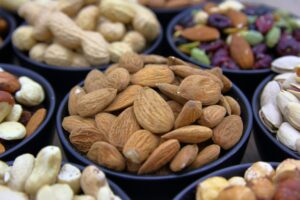
The Clean Fat Signal: Healthy fats (avocados, activated nuts, and olive oil) act as the final green light, telling our brain that high-quality fuel has arrived.
A diet plan is a temporary war against our body. GLP-1 optimization is a permanent peace treaty.
When our brain actually receives the signal that it’s full, we don’t need “portion control” because we simply don’t want the extra food. We’re finally swimming with the current and working with our biology. The weight loss, the energy, and the focus? They simply take care of themselves.
